Bhuvan.Essays, notes and small websites
Topics · 8

Politics. 1 essay and 7 notes.

Essays

Notes7

Note

On brain rot

A thoughtful essay) by Mahika Dhar in Public Books on brain rot as political resistance. Please read it. I want to preface this by saying I could be wrong. This might well be a misreading of her piece. But I came away with a small confusion, and I think it’s worth sitting with. A little mental exercise: replace “brain…

Read the note →
Public Books · publicbooks.org ↗If We Rot, You Rot with Us - Public Books“Despite the enduring belief that literary nonsense is primarily directed toward children—an idea that has its roots in the popularity of Lewis Carroll and Dr. Seuss—literary nonsense has historically been weaponized by…
publicbooks.org ↗
Link

Hyperpolitics

I’m a huge fan of Anton Jäger, and I’ve been reading his writing for a long time. I’m yet to read Hyperpolitics, but I’ve heard several podcasts in which Jäger has spoken about the concept. The concept offers a useful lens to make sense of the contemporary political landscape and its interactions with the civil society:

Hyperpolitics is what came next: intense politicisation, with neither institutional roots nor ambitions. “On the surface,” Jäger writes, “the Black Lives Matter protests would seem to have little in common with the mob that stormed the Capitol in January 2021. Morally, they are worlds apart … Organisationally, however, these movements exhibit a striking set of similarities: fleeting in duration, they maintain no membership rolls and struggle to impose any real discipline on their adherents.” As a consequence, everything explodes and nothing changes; movements surge suddenly forward and yet no territory is taken. He quotes political theorist Paolo Gerbaudo’s contemporary interpretation of the evocative phrase “bodies without organs”. Modern political movements, he writes, are “concentrated and muscular, yet without an internal metabolism”.

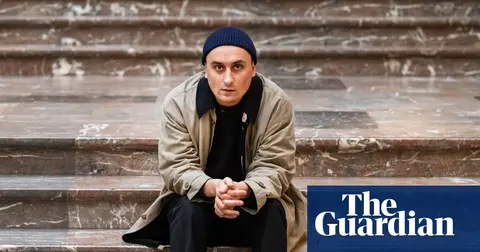
the Guardian · theguardian.com ↗Meet the man whose groundbreaking book is being devoured by the leftAnton Jäger has been lauded for his exceptional ability to make sense of these strange political times – and he’s only 32. The writer and academic explains why we’re living in an age of hyperpolitics
theguardian.com ↗
Note

Age of conspiracies

Thoughtful piece by David Wallace-Wells on the conspiratorial and paranoid turn of American society:

But what happens when history starts to resemble myth, when the inconsistencies reveal themselves not through deep study but in the most superficial scroll of our phones?

The new age of political paranoia obviously reflects a toxic efflorescence of grass-roots distrust, not to mention the structural pathologies of a new information environment. But sometimes I wonder whether we’re putting too much emphasis on those structures in trying to make sense of that paranoia. Is conspiracy theory downstream from culture, in other words, or from history? Is it a question of how information flows to us or what flotsam is coming our way? Probably the influence doesn’t run in just one direction, however comforting it may be to believe a less polluted information environment is just a few design tweaks away.

nytimes.com ↗
Note

India is now a one-party country

Two brilliant posts by Pranay Kotasthane and Amey Tirodkar capture something deeply worrying about Indian politics: the rising dominance of the BJP, and the slow drift towards what feels like creeping one-partyism. I’m not using words like authoritarianism because they often flatten the nuance of what is happening.…

Read the note →
Link

A moderately ambitious India

Pranay Kotasthane as usual with a thoughtful take on the state of affairs:

Lastly, the general impression I take away from this budget is the realisation of a party in power which has figured out a way to win elections in India that’s not contingent on strong economic performance. So long as you don’t screw up the economy badly, a combination of emotional issues and timely welfarism (direct cash transfer just before elections is a new, powerful tool now) should see you through most elections. Therefore, a 6.5 per cent growth and a 4 per cent fiscal deficit in a world that’s volatile and unpredictable is good enough to keep the global investors mildly interested while keeping the winning machine going domestically. That may not be enough for us to get out of the middle-income trap or lose out on the narrow window of demographic dividend we had. But the willingness to take bolder bets to address such structural challenges seems to have dissipated. More of the same is what we have settled for.
publicpolicy.substack.com ↗
Note

The short-termism in our stars

If only politicians could think past the next 8 minutes:

Manipur’s misfortunes can seem irrelevant to Indians who live in the country’s heartlands. Yet the state’s fate has national implications. It has been riven by a decades-long insurgency, led largely by Meitei groups who desire independence. That had been quelled in recent years, but as frustration and alienation deepen there is a risk that it will resurface. Above all, the crisis offers a warning about the dangers of identity politics. Across India, parties increasingly campaign on promises of special privileges and protections for ethnic or caste groups. As affairs in Manipur demonstrate, that is as likely to widen rifts as to heal them.